Planting good food and cultivating a thriving community and ecosystem

Wednesday, April 30, 2014

The "family" Part of Family Farm and Grain Salad

I remember the first set of emails I made trying to volunteer on a farm. I sent out probably 20 letters asking around if any local farms were looking for volunteers. I attached my resume and everything. I only got one response- from Robert at Pacific Star Gardens.  I wasn't particularly shocked. Having worked with volunteers before, I know that they can sometimes be more work to manage than they are help. Nonetheless, I was excited to go out and work on a farm. Tarra was excited to go out too.

We went out mostly on weekends for a few hours doing simple chores. After we were done, Robert usually welcomed us to pick what we wanted out of the gardens to take home. It was great to get outside, do something productive and physical and get rewarded with the most beautiful, fresh, organic veggies. We were hooked.

After a year of volunteering, it had start to sink in that I wanted to do this full time. I even was excited to go out after a long work week at a produce department. When I first brought it up to Tarra, she was supportive. Though, if I told her I wanted to be a street performer, I swear she'd stand behind me.  I know she had to be tired of me lamenting about how I had just really botched up college and now had 3 degrees I didn't care to use. I think she was grateful to see me take a direction really.

She encouraged me to go to the California Farm Academy (CFA). We talked many a long talks about what our lives might be like if I was a full time farmer. Could we live with me making only $3 an hour. (Umm what? You're kidding right? Nope. The average small farm owner makes $3 an hour. Granted we work 80 hours a week it works out to a liveable wage. I mean food is included, right?) Could we live with aforementioned 80 hour work-weeks? What about kids? Can we plan to have a baby in the winter so come spring-busy-time we have a baby that can at least sit up? How many weekends can I "take" from Tarra before she looks forward to Mondays at her "normal" job. Will she help me market? We tried to cover all the hypothetical and really talk them through.  My dream was important, but so was the woman of my dreams. Could they co-exist?

The first challenge came in my first paid gig. It was during a summer that I was attending CFA, back yard gardening, volunteering at PSG, AND this new job. It was a non-profit sort of thing where I would have to be a farm manager and a volunteer coordinator. I was so excited for it. It played on all my strengths and fueled all my passions. It was perfect, except for the land owner. Let's just say we had a difference in opinion in interpersonal communication styles: I thought you should be nice when talking to people, he did not find that necessary. He would send emails that were so passive aggressive, micro-managing, dismissive and disrespectful... they would leave me in tears. Not to mention the times he actually red-in-the-face yelled at me. Tarra bore the brunt of my anguish.
She had to not only help me do all the really hard physical work of starting from scratch in a new place to farm, but all of the emotional baggage too. It was hard to say the least.

The second big challenge was the P.E. Tarra, by trade, is an engineer. She is in the process of getting her Professional Engineering License that will allow her to be promoted. It is comprised of three tests, one that is 8 hours and two more 2 hour tests. The studying, the cost, and the anxiety are immense. She really needs me to help keep her fed, focused, the house clean, laundry done, and soothe her worries. No problem, I promised that in my vows. Except, at the end of the day, the last thing I can offer is extra support. I need extra support! I never had enough energy to do it all which meant that sometimes dinner got made, the dishes never got done, Tarra did the laundry while procrastinating from studying, and the house was a disaster. None of this helped anyone's mood. Try as I might, I could just never convince the dog to help out either.

With all of that, I was burning my candle at both ends and holding the whole thing over an open flame. Needless to say, this was hard on our relationship. My favorite fight was over ice cream. We had gone out to eat one night right before the test because I was too tired to cook. On the way home, I suggested we stop to get a pint of ice cream. "You know I need to study! We don't have time!" Tarra snapped. "For real? It'll take 5 minutes. If you don't pass because of 5 minutes less studying, you've got bigger problems than ice cream!" We both decided to end it there, make a U-turn and pick up a pint. I'd like to say bickering like that was rare, but it was pretty regular.

As the season picks up, Tarra and I grow more and more restless waiting for her test results. If she passes, we're free and clear to live our lives with normal farm-stress. If not, it's another set of hundreds of dollars and lost weekends to studying. Even if she does pass, how many ice cream fights will we have when we're both working 7 days a week?

I can't predict the future, but I can tell you that there will be more conflict. I can also testify that farming isn't just physically hard. It taxes everything you've got, marriage included. Tarra is an amazing partner though, and I think we're stronger for the challenges so far. I know that there are a lot of really hard times coming, not even thinking about throwing kids in the mix, but I know we'll work it out in our own way.  This is the life we chose because it feeds our souls. Nothing really beautiful came from a gentle, easy journey.

Recently, Tarra has been freed from the grips of the P.E. (at least until we find out if she passed) and came out to the farm. Here are some pictures from one of our first days out there together in waay too long. I am always so glad to have her out with me. Not just for the help, but because everything seems easier with her around. Drudgery becomes fun. Also, you really can't beat a good snuggle break in the shade.
Byron enjoys a good nap lap during weeding.

As much as the melons enjoy being covered by shade cloth when it's cold, the weeds love it more.

AHA! I knew there was a melon beneath those weeds! (This image is the "after" of the one previous. Yes, there are that many weeds in our "weed bank")

What happens if you miss an asparagus by a day? It gets GINORMOUS!

Then, it blossoms! This is an asparagus fern. What we eat of asparagus is really the flower stalk! It ends up being this lovely fern plant that makes delicious food from the sun to feed its roots so it can make us more asparagus noms next year.

Con: your riser is leaking and making a puddle. Pro: this cute little guy lives here now.

We were hijacked by a couple of rogue chickens! "Alright naked neck, you steer. brown screaming chicken, you do the pedals. I'll keep a lookout!"

This was B.B. short for "broken beak". Cross beaks happen sometimes in chickens. Hers was pretty severe though. She passed away last week. It was probably just too hard to get enough food. Rest in peace BB.


The recipe for this week is a great way to use up a lot of your veggies! It's also a super great way to sneak more whole grains in to your diet. Aside from also being delicious, it's super quick to make!

Spring Grain Salad

Whole Grain
Protein
Nuts and Seeds
Radishes‐ sliced
Snap Peas‐ halved
Parsley‐chopped
Arugula Flowers
Lettuce‐chopped

Cook your grain and let cool. Mix in your protein, seeds, herbs, and veggies into the grain and add a dressing of choice. Toss mixture over lettuce and top with flowers. Viola! Fancy dinner!I used chicken, sunflower seeds, sliced almonds, quinoa, and artichoke garlic dressing with a whole orange squeezed in‐ but you can use what you have/like!

Wednesday, April 16, 2014

Gearing Up for the Season and Sautéed Broccolini

Things are moving quick now. The soil is almost dry enough to till, and once it's bedded up, it's GO time. There are four beds of onions, six beds of melons and watermelons, two beds of cabbage, four beds of tomatoes, three beds of lettuce, two beds of beets, radishes, and turnips (and a partridge in a pear tree)...and probably three things I am forgetting...ready to go into the ground! The busy season is almost upon us.

We're painting signs to set out on the road to help people find us for U-Pick and farm-stand sales. I got to use some of my art degree skills, and there are fewer things that have made me happy than a short break from hoeing to sit down to paint.

I call it, "lava lamp melon"

We're going to cut these out with a jig-saw. I have never used one, but I assume this can be cut out like this...right?

Makes me wish summer would come sooner. I am dreaming of melon and prosciutto.

I was warned that trying to paint a blackberry is hard. It ends up looking like a bunch of grapes...Juicy grapes though, right?

Abstract apricot. 

The weather warming up is great for all plants, including weeds. They come in thick, like a carpet sometimes, and would love to grow 5' if you let them. FIVE FEET? Surely, you're kidding. Nope, come out this weekend and we'll play hide and seek in them. Byron is a super fan of sleeping in them for shade. He hides so well I think I've lost him sometimes. He's a pretty great farm dog for being as fancy as he is. 

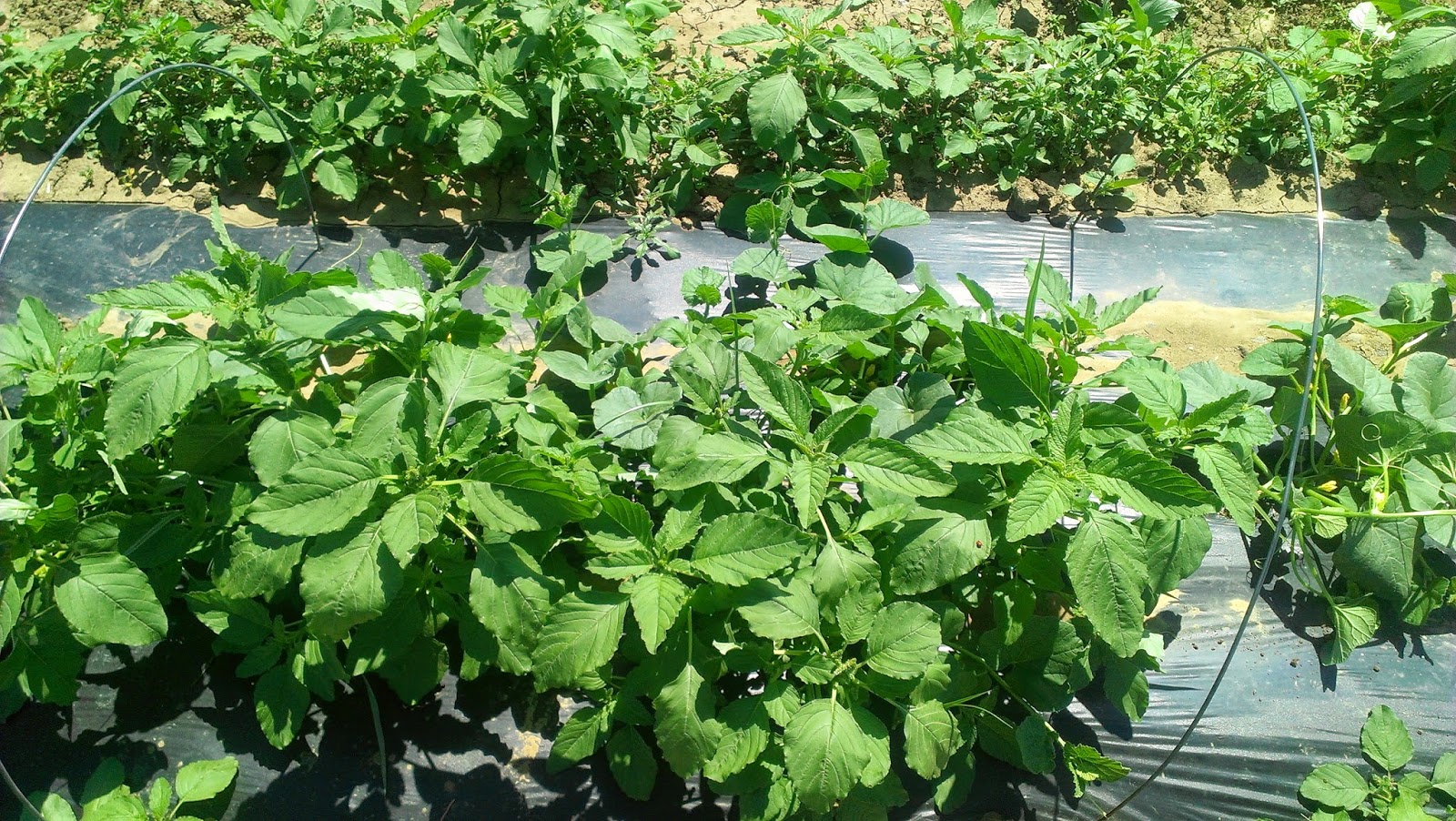
To the right, you'll see lamb's quarter I have hoed out around the lime-green leaves of rainbow chard. to the left you'll see the lovely carpet they're forming, thinking I will be lazy and leave them. HA!

Byron had an epic adventure digging out a ground squirrel home. He dug them out about 3' down and it kept going down. Industrious little buggers.

My wife, Tarra caught this lovely portrait of me working. It was too kitschy not to share.


 This week's recipe is sweet and simple. Sometimes the best ways to treat super-great fresh produce is simple. Broccoli is something that gets a bad rap, especially from kids. I can understand it, I can't stand it raw. Byron on the other hand, loves it. I have to watch him when we're in the garden. He'll sneak off leaves to chew on in the weeds. This recipe for sautéed broccolini might change your tune if you're on the fence about broccoli. The gentle frying brings out broccoli's sweetness, and the lemon and garlic help balance any bitter notes left.

  • Broccoli- whole
  • Garlic-Sliced
  • Olive oil
  • Lemon slices
Pour a thin layer of oil into a good frying pan and heat on med-high until it shimmers. Drop the sliced garlic in and cook it until it just starts to turn golden. Drop the broccoli in whole, yes whole, the leaves and stalks are tender and tasty. Cook until the leaves begin to wilt and the broccoli begins to turn a darker color if not golden in some places. Remove the garlic and broccoli, toss with salt, and spritz with lemon. Serve over cooked whole grains, with a fried egg, or on pizza.

Enjoy! 


Strawberries! Strawberries! Strawberries!

Ever wonder why strawberries are so dang expensive? They're a lot of work folks. We have about 1/2 an acre planted out to strawberries. which is about 30 rows that are 200 feet long and 5 feet across. I'm not good at math, but I can tell you that's a lot! They also take about 8 months before they bear fruit. That is a lot of time to keep weeds out of them...Plus, they're a pain to plant and send out runners that need to be clipped or rooted. They're lucky they're delicious.

We plant the berries mostly for U-Pick. It's such a heartwarming thing when families come out stringing toddlers along, parents teaching kids small things about how food grows like, "Do you see those? They're onions! Onions grow underground." The children oohed and awed. It was garlic they were looking at, but I am sure no one will be scared to learn onions are sort of a half-on half-under the ground sort of thing.

I say this not to poke fun, but to point out that people just rarely see what food looks like growing. I am no exception. I just learned last summer while growing potatoes just how on earth they do it! Did you know potatoes flowered? They make a "fruit" that has seeds? Totally blew my mind. But, that's our modern lives. Veggies and fruit come picked, cleaned and packed for us. We just never learned.

Our U-Pick is really a win-win. We get to offer that rare experience of coming on a real, working family farm to our customers. They get to come and show their families where food comes from. Food literacy is such an underrated concept, and we're only too happy to be a public classroom. Plus, we get to grow berries, and sell them, all without picking. Which makes me happier than you'll ever know- it takes quite a long time to pick enough berries to even think of selling. I personally think the pink-stained faces of toddlers speak for themselves how much fun it is when it's not your job to pick berries.

We try to set up the farm to make it easy on customers to find their buckets and get them filled. Our farmstand has buckets, baskets, a scale, and instructions to help them along. We also put up signs on the farm to help customers orient themselves. I got the privilege this year of painting them!

Here are the ones that will be staked in the road to get people oriented towards the patch.

Sometimes, words aren't needed. The deliciousness speaks for itself.

This large one will be stuck to a trellis and stand post at the berry patch.

Here is the first flush I had to pick myself before the rain came. If ripe berries sit in the rain, they rot within hours. I picked 10 gallon buckets in a few hours...I later cut their tops off, vacuum sealed them and froze them. There will be jam in your future.
If you want to come join the magical fun of U-Pick, come by! We'll have strawberries until June, apricots next month sometime, and black berries in early summer! Just Google directions to Pacific Star Gardens in Woodland and look for the red-roofed farm-stand!

This week's recipe is in honor of the berry-fest: Strawberry Soda! Never made soda before? Never fear, it's super simple. This recipe comes from one of my new favorite books, True Brews by: Emma Christensen. If you've ever wondered about making your own wine, beer, kombucha, mead, or even sake- this is a must have! The recipe is as follows:

Strawberry Soda-

  • 2lbs Strawberries
  • 1/4 C Lemon Juice
  • 1 C water, plus extra to fill bottle
  • Pinch of salt
  • 1/8 tsp dry champagne yeast
Chop the tops off the berries, and pulse in a food processor for a few spins. Bring water to a light boil and dissolve sugar and salt. Add this plus the lemon juice to the berries and let sit for 10 minutes. This is called macerating. Look, you've done something fancy. Really, you're just encouraging the natural fruit juices to come out to join the soda party.

Strain this muck through a sieve, mashing the pulp against the sides to get all the good stuff out into a bowl. Probably a good idea to wear an apron.  Take this juice and pour it into a clean two liter plastic bottle, or glass swing top jar if you're brave and vigilant*. Add yeast and cap it off. Now do the hokey-pokey and shake that all about.

Leave it out on the counter for 12-48 hours until it carbonates. Longer in the winter, shorter in the summer. With a plastic bottle, you'll know it's ready when it feels firm to squeeze it. With a glass swing-top, you'll know by it's loud pop when you release the seal to "burp" it every six or so hours.

When it's carbonated to taste, put it in the fridge for up to two weeks. Enjoy straight, or with a shot of your favorite fermented spirit.

*Glass must be babysat when carbonating. If you forget to burp it- taking the swing-top seal out to let some gas out, it WILL EXPLODE. NO, SERIOUSLY THERE WILL BE BROKEN GLASS AND SUGAR SYRUP EVERYWHERE. Speaking from experience, surely. Personally, it's the only way I do things though, not down with BPA.

Post-Winter-Clean-Up and Creamed Leeks

I'd wager a bet that when people think of farming, they imagine harvesting, planting, probably weeding. What I am sure they don't consider is all the clean up after the plant has left the farm. This can be quite a chore with most winter crops when it is too wet to stay on top of the weeds (ever try hoeing the mud? Horrible if not impossible. I'm just not a fan.) and with crops that need staking, trellising, shade cover, or other fancy things. Here is a tool that has become my best friend.

Nope, not a torture device, I promise. It's a stake puller. These stakes were set in to hold down the shade cloth to keep the winter lettuces from freezing. You can see the metal hoops to the right that worked as a support to keep the cloth up off the lettuces. Those are not rusted into the ground and need to be worked out with pliers. Let's here it for getting things done on time! Hip hip...wait I forgot I was supposed to be doing nine other things! Ah well, strength training! P-90 FARM anyone?

Here you can see how it leverages on it's one leg and pulls the stake up (the stake is the pole to the right). It might be hard to imagine, but it works quite nicely. This is a picture of it working out in the tomatoes, you can see Byron helping in the top middle. Yes, we have tomato plants right now! We do early tomatoes, they might be ready the beginning of July!


This time of spring puts you in a weird place of straddling seasons. The winter garden is still trying its darndest to keep making food against all odds and hot weather, but we're picking now out of the spring garden. Much of the spring crops are in the ground just starting or hardening off- waiting to get into the ground, but the green house is full of summer's promise. The weather is beautiful though, and I love being busy, so I am pretty happy!

The chickens are laying like crazy too! The hens just love the sunshine and squawk all day about it. The yolks this time of year are beautiful. All the green grass sprouting in their enclosure gives the yolks a dark, rich orange. Our first set of babies hatched out the other day. I'd share a picture, but I don't want to get bitten. Yes, turkeys bite- hard. They puff up something fierce, feathers on end, and hiss to let you know you're too close to their eggs or babies. When the mommas, yes two of them- they seem to want to sit in sets- come off the nest I'll grab a picture to share. For now, here are some photos of a few of our more eccentric chickens taken by the wonderful, generous, and extraordinarily kind, Deborah Lattimore:

This is one of our silkie chickens. Fun fact: silkie skin and bones are black. They also look like they missed out on the "nothing is broadcast in black and white anymore" memo.

This is Phyllis. Like Phyllis Diller. It's a wonder this chicken can see with that fabulous crown of feathers. 
The recipe for this week honors the straddling of seasons: creamed leeks. Leeks love being over-wintered. This means planting them in late fall, letting them bear the frost, and harvesting them in the spring. The leeks in your box are about 5 months in the making! They might be a new vegetable for you, but never fear, these onion relatives are a tasty new friend!

Creamed Leeks:
  • All the leeks you have on hand
  • Cream, broth
  •  Butter, oil
Heat the oven to 425*. Cut off the white to light green portion of the leek. This is the "edible" part. The upper leaves are a bit too leathery to eat, but make amazing stock! Pop those babies in a bag and shove them in the freezer for stock making later! Cut the roots off the bottom of the leek. What you have left is for eats. Split it long-ways and rinse under running water, careful to get in between the outer few leaves. Dirt loves to hide here.

Set the leek halves, still mostly in tact hopefully,  in a baking pan in a single layer. Mix up your liquid and fat of choice. How much? Meh, make enough to barely cover the leeks in the pan. I like half cream- half stock with butter- but you can do veggie stock and coconut oil for a vegan version. Feel free to add fresh herbs or garlic to the party. Pour the liquid over the leeks and toss in the oven. Cook until the liquid has almost evaporated or the tops of the leeks are browning, whichever comes first. turn the leeks over and brown on top. 

What you're removing from the oven is a leek transformed! It is creamy, soft, and slightly oniony perfection! Toss this goodness on toast or my favorite, puree it and add a bit more cream and some grated Parmesan and mix into cooked pasta!

Enjoy!

Wednesday, March 26, 2014

Cleaveland- The Last Uni-Turkey and Spring Minestrone

Spring always harkens the return of migratory birds, flowers bursting forth from cold, naked branches, dreams of tomatoes, and many, many babies. For us, the babies in question are chicks and poults. We don't usually let our chickens sit on nests if we can help it- though they're crafty hiders! But, we are trying to continue the Narraganset breed of turkey we currently raise, so we let our turkey hens sit- if they're so inclined. We had an early hatch out of chicks this past Valentine's day. A mamma turkey hen hatched 5 chicken chicks and 4 turkey poults. Yes, she hatched chickens. Despite our best efforts to keep chickens and turkeys separate (the toms can be very aggressive towards chickens), our chickens are truly "free range". They really go where they want.

So, our mamma had a sizable clutch following her this past February. They were painfully cute.

You really couldn't get too close without your body erupting in SQUUUEEEEEEE!

We had some experience with mammas and babies not doing so well in our large open enclosure. Every time we'd go out to feed the birds, it seemed like the mamma hens would have one less baby with them. It could be the ground squirrels (yes, the horrible beasts steal eggs AND babies), it could be crows or other birds of prey, it could even be other chickens or turkey hens. Whatever it is, we were told that the new bird family would do better if we separated them. So, we built them a nice little sub-division. It seemed ok for a few days. Mamma got out- we put her back in. A baby got out, we put it back in. We should have seen it then, but we were perhaps blinded by optimism.

We went out one afternoon to the saddest scene. It seems that mamma got out after we fed them in the morning, and didn't come back. It must've been just a bit too cold, and us just a bit too late, but all 9 babies were lined against the fence, motionless. We piled them up in a box, thanked them for living at our farm, and set out to the compost pile to bury them. I noticed one still kicking. I pulled it up and held its shivering body between my hands hoping to make it comfortable as it left us.
 It seemed to take forever, and it just wrenched my heart that it was struggling so hard. I felt for it, but had things to do, so I did what seemed to make sense- tucked it between my boobs to keep it warm and went on with my chores. It soon stopped shivering, and took up kicking instead.

Pretty sure cleavage was made to support baby birds.
It started peeping loudly, and I allowed a little hope. After a half and hour, it could almost stand again, so we set the poult up in the brooding box with hot water bottles, some food, and water. He seemed frail, but took in food and water, so we crossed our fingers. We giggled naming him cleave-land, and wished him good-night.

Byron was wishing Cleaveland a goodnight. He checked on him every day! He would run out of the car as I got to the farm and run straight to the greenhouse and bark until I opened the door. Cute!

Cleaveland is doing well, he even escaped yesterday when I was changing out the water in the brooder box. Seems he developed some spunk along the way. Lone chicks rarely do well when introduced to the main flock, so we got him some meat-chicken friends. There are 36 babies running amok in the greenhouse brooder, but Cleaveland is clearly larger, and much braver. He is ready for his big trip out to the big coop with this new friends.

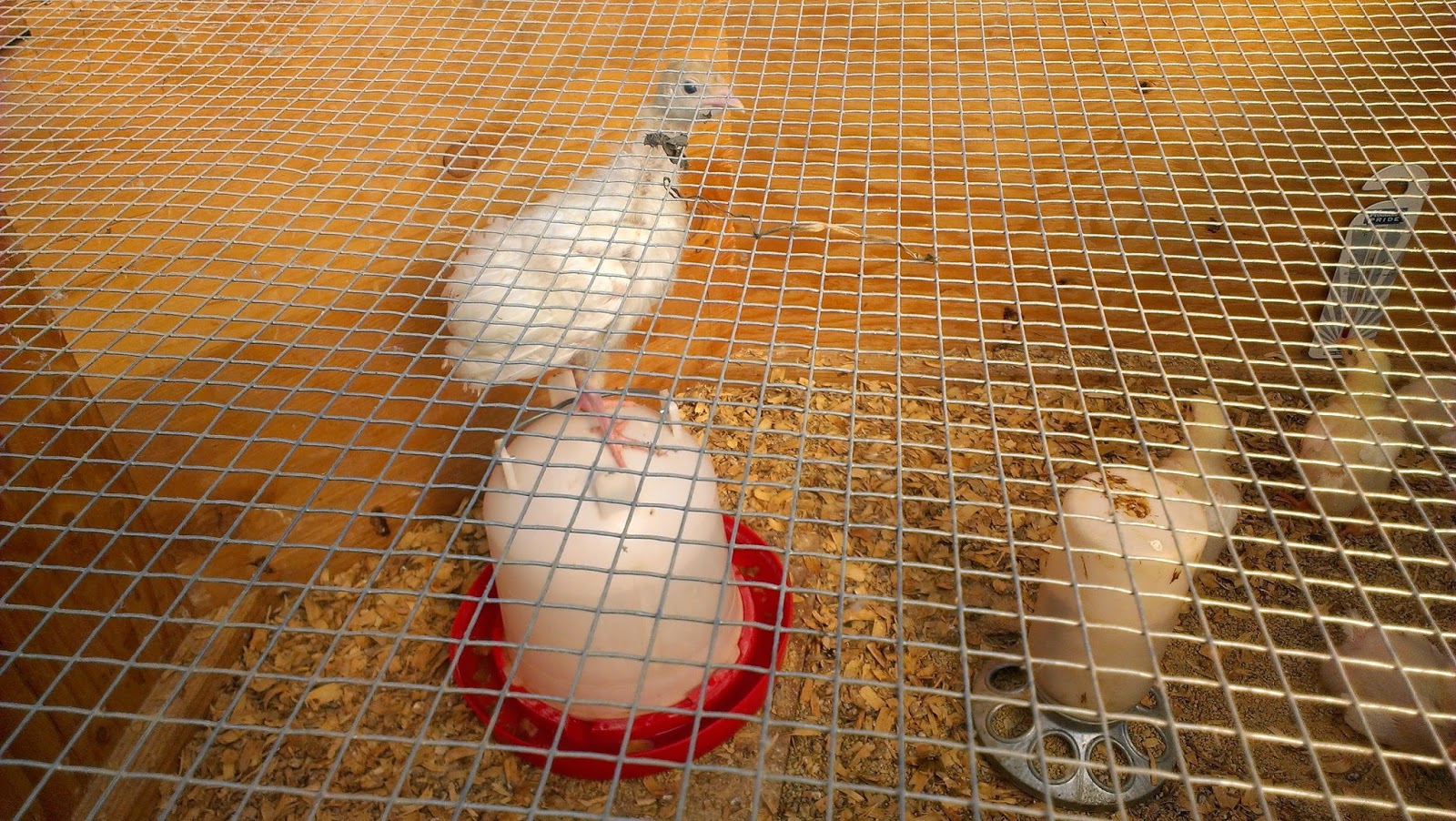
Atop the waterer, Cleaveland plots his escape.

The wins and losses of the farm sometimes seem uneventful during all the (controlled) near-chaos that is running a farm. Rarely are they mourned. Losses in earnings are frustrating and stressful. Crop losses can be anywhere from disappointing to devastating. Though, nothing compares really, to when your animals die. You accept that death is a part of life, but it is always sad...The Grace in farming though, comes in second chances. If you can find the heart and courage to try again, that is.
Two turkey mammas have set up shop out in the back of the poultry enclosure. No one has started to sit yet, but we're hopeful.


Spring is full of second chances and promises of bounty. Here is a great spring soup recipe from Bon Appetit to whet your appetite in anticipation of those promises. It is a great seasonal transition soup. We're still making use of greens and roots, but herbs make a sneak appearance. It's a cozy winter's-end meal.

INGREDIENTS

  • 6 ounces ground chicken (about 3/4 cup)
  • 1/2 cup fresh breadcrumbs
  • 6 tablespoons finely grated Parmesan, divided, plus more for garnish
  • 4 garlic cloves, 2 minced, 2 thinly sliced
  • 2 tablespoons chopped fresh chives
  • 1 large egg, whisked to blend
  • Kosher salt, freshly ground pepper
  • 2 tablespoons extra-virgin olive oil
  • 1 leek, white and pale-green parts only, sliced into 1/4-inch rounds
  • 5 cups low-salt chicken broth
  • 3/4 cup ditalini or other small pasta
  • 1 cup 1/2-inch rounds peeled carrots
  • 1 cup (packed) baby spinach 
 Mix chicken, breadcrumbs, 3 Tbsp. Parmesan, 2 minced garlic cloves, chives, egg, 3/4 tsp. salt, and 1/4 tsp. pepper in a medium bowl. Form into 1/2-inch-diameter meatballs (makes about 28). Heat oil in a small pot over medium heat. Cook meatballs until golden all over, about 3 minutes (they will finish cooking in soup). Transfer to a plate; set aside.

 Add leek to pot and cook, stirring often, until beginning to soften, about 3 minutes. Add 2 thinly sliced garlic cloves; cook for 1 minute. Add broth and 2 cups water; bring to a boil. Stir in pasta and carrots; simmer until pasta is almost al dente, about 8 minutes. Add meatballs; simmer until pasta is al dente, carrots are tender, and meatballs are cooked through, about 3 minutes. Add spinach and remaining 3 Tbsp. Parmesan; stir until spinach is wilted and Parmesan is melted. Season with salt and pepper.

Enjoy!

Saturday, March 22, 2014

Global Weirding and Parsnip Fries

Winter's last warm breaths are breathing life into spring. Though, spring is wearing a face that feels a lot like summer.  It was 80* on the farm the other day. It's all too strange. The first case of West Nile was reported in the central Valley- two months earlier this year than last. As far as I could tell, the bugs never really left. They seem to love the warm dry winter.  The crops seem to love it too, for the time being- as long as the well keeps supplying water that is.

We're lucky for the moment to be so heavily dependent on annuals. We have the freedom to plant- or not plant most of our fields. Though, we will have to rip out every other walnut tree in the back. It was expensive to water them in the first place, but we have other plans now seeing as how droughts are not just a fluke. Drought seems to be a state of existence for California, and we will have to begin taking uncomfortably close looks at the way we live, eat and play. With such dry weather, it may not make sense for us to grow grazing animals on pasture, rice, corn...we may have to reconsider lawns, pools, washing our cars often...it'll be ugly, and we may be unwilling or unable to admit it, but we're all responsible for our natural resources and when they're scarce, we all need to do our part to ensure we're being efficient and prudent.

Prudence for us is less a moral stance, though it has strong roots there, but a decision to stay in business. We're always looking at how we farm and re-evaluating practices to make sure that it makes sense financially, but it isn't wasteful of petroleum products (gas/plastics), water, or energy in general- whether it is ours or from the grid. We're always thinking about energy and nutrient flows on the farm as well, and how we can make each piece work more for us- like using the chickens to clean up fields and having them "process" the waste into something useful for the next planting. We're wondering if we couldn't get pigs to do some plowing or goats to do some weed eradication. We're all part of this ecosystem, and must find the right way to live in it, working with it- even if it's erratic.

Though we're just a few days into spring, things are busy-busy for us. Here are a few things we've been up to:

The one time it did rain hard, of course we had to go out and pick 200 heads of mizuna for the food bank. I finally gave in and took my shoes off. The mud would have taken them anyway...

Most times you don't pick everything from a bed, and it is left along with the weeds until we can get back to it to mow, till, and bed back up. Sometimes though, we don't get to it...and the weeds go to town! With all this shade, the soil would have never died out in time for us to till (putting a few thousand pounds of tractor on wet soil= compaction nightmare). So, I had to get to most of the leafy-weedy canopy by hand. Cool thing about a super sharp hoe? You get these cool cross-sections of roots you hacked! These are old chioggia beets!

Here is a cross section of radishes that have grown in together. How cool is this?

The blackberries we grow must be trellised each winter. It is a grueling, sharp, nasty job. Alain and Anna of Full Circle plugged away dutifully this winter and got most of them done. Here, I came to help one afternoon, and loyal to a fault, Byron just couldn't leave my side, nor stay put on his "safe space" of cardboard I made him. He HAD to be right next to me. he was tired of the sharps on his tiny dog feet and decided to hitch a ride while I was trimming roots.

Farming can be rough on small red dogs.


While we wait for spring to share the promises of her bounty, we must savor the last of our winter roots. Parsnips are an under-appreciated vegetable in my humble opinion. Ugly as they may be, and unpleasant raw to boot, cooking them unleashes a tender, sweet side that has hints of anise flavor. Here is a recipe for parsnip fries that will knock your socks off and seriously impress your burger. The recipe comes from Bon Appetit. Serve it with lemon-garlic aoili and relish this novel new friend you've made.

INGREDIENTS

  • 2 1/2 pounds parsnips or carrots, peeled, cut into about 3x1/2-inch strips
  • 1 tablespoon finely chopped fresh rosemary, plus 5 sprigs rosemary
  • 1 large garlic clove, minced
  • 3 tablespoons olive oil
  • Kosher salt, freshly ground pepper
  • 1/2 teaspoon (or more) ground cumin  
Preheat oven to 450°. Mix parsnips, chopped rosemary, garlic, and oil on a large rimmed baking sheet. Season with salt and pepper and toss to coat. Spread out in a single layer. Scatter rosemary sprigs over.

Roast for 10 minutes; turn parsnips and roast until parsnips are tender and browned in spots, 10–15 minutes longer. Crumble leaves from rosemary sprigs over; discard stems and toss to coat. Sprinkle 1/2 tsp. cumin over. Season to taste with salt, pepper, and more cumin, if desired.


Sunday, February 9, 2014

Planting Peas, Winning at Homemade Stock and Making Potage of Turnip

It's been awhile, I know. It was easy to remember to keep posting when I had my weekly routine of veggie boxes. I felt I had a responsibility to help you all to enjoy the veggies we grew for you in the tastiest way possible. BUT! Even though the veggie boxes have been put on pause, I'm definitely still out farming! I put in some snap, snow, and shelling peas a few weeks back.

When planting beans, it's a good idea to inoculate them. They need a specific organism to live on their root nodules to help them fix nitrogen from the air.

This organism apparently can be powdered like Kool-Aid and with a few sprinkles of water will adhere to the peas. They'll live together in symbiotic harmony making us eats. Aww how romantic. ,

Here is an experimental solution to the problem of the snaking drip. With normal irrigation, the drip tape expands and contracts and moves all over, usually far from the line of seeds or plants it needs to water. You can pin it in place with J-hooks (tent stakes), but you'll have to find them all and undo them to weed. Here, you just unhook one and flip the tape off, weed, and flip it back on. We'll see how this does...

The peas sadly won't be with us until April. And, if you're trying to keep to a habit of eating seasonally, you may be sick of the sight of root vegetables. I mean, really, how many roasted roots can you eat? Well, for me the answer is one or two pans a season. I'm really not a fan. I'm more of a soup girl myself. For me, it's the perfect winter meal. It's usually pretty inexpensive. With soup, just a few slices of bread and butter or a grilled cheese- and- BAM! It's a meal. Also, it makes great left-overs. But, soup Ashley, how boring?! True, you may have been slighted by sad soups in the past: the stuff out of a can leaves something to be desired. I'd like to share some secrets to making a damned good pot of soup that will quickly turn your boring roots into creamy bliss.

First: The stock.

Make it. If you're a really busy person, you're probably going to roll your eyes and tell me no. Fine, I get it. Being a busy modern person is hard, and there is little patience ever left to make stock, let alone dinner...and the dishes from dinner. But, it's secretly super easy. No measurements, cutting, stirring...Just toss stuff in a pot and let it go! Also, the thought of commercial stock being made out of industrial vegetable/animal scraps doesn't really do it for me...

Veggie Broth:

Please don't buy things to make stock out of. It's kind of expensive, and definitely wasteful. If you make veggie dishes regularly, and have a plastic bag and a freezer- you're good to go! Every time you make dinner, take the onion ends, leek tops, carrot peels and ends, beet greens, chard stems, potato nubs and peels, fennel tops- whatever you're going to throw out- and toss it in a bag in the freezer instead. When said bag is full, it's stock time! Toss the whole bag into a big pot ideally filling said pot nearly to the top with veggies, fill with water and set on stove. Add bay leaves, dried herbs, fresh herbs, and peppercorns. Wait to salt until the end. Boil for a few hours, or a half hour. Whatever time you have! Strain, and store in the freezer, fridge, or pressure can that goodness!

 But! What if I don't have all the right stuff? I mean, aren't I supposed to have carrots and celery and onions? Meh. I mean, you can be persnickity with all that, but I haven't found it to be necessary. I've made great broth with only leek tops and fennel bits. It's just vegetable flavored water in the end. Speaking of specific broths...

Garlic Broth:

This is my super secret weapon to the best soup ever. You might have to buy garlic for this, unless you're a garlic monster like me and have handfulls of inner cloves that are just too silly to peal crowding your garlic bowl/basket. Grab your big pot and guess how many heads of garlic would fit in a single layer on the bottom (probably 5-10). Cut the heads of garlic in half so that all the cloves are in half. No, you don't need to peel them. Toss in pot and add your bay leaves, fresh and dried herbs, peppercorns, and salt at the end. Boil for awhile. A few hours is best, but just one will do. Strain and store! Use this and veggie broth wherever chicken stock or water is called for in soup.

Chicken Stock:

Save your carcasses! Just like the veggies, toss them in a good freezer bag. Guts too! When you have at least two full sets of bird bones, toss them into a broiler until they get all golden colored (this gives that nice golden color to your broth...naturally). Add veggies if you want, but they're not necessary.   Toss roasted bones and any fat into your big pot and fill with water. Add your bay leaves, peppercorns, and herbs.You most definitely want to give the bones a good long boil, at least an hour, if not two or three. You will get a richer taste the longer you boil. Feed any meaty bits to your pets, strain, salt to taste, and store!

O.K. so, that proves it's simple, I mean you just toss stuff in a pot and let it boil...I can manage that. But, is it worth it? YES! It is worlds cheaper- I mean, you are using things you'd normally throw away, so that makes it near no cost. You know where the ingredients come from, you know you aren't going to store it in something that is hazardous to your health, and it TASTES MUCH BETTER! I promise. Give it a try. One big pot of stock usually lasts me a few months, and I am a soup beast.

Cool, so I have this great homemade stock... What's this about turnip soup? This soup: Potage of Turnip, comes from my soup bible- Soup: a way of life by Barbara Kafka. It's a cozy winter soup that transforms your roots into a creamy pot of sweet and savory deliciousness. Feel free to change out the roots or add extras.

Potage of Turnips

1/2 lb potatoes diced
1 turnip diced
3 carrots, sliced
1 onion, diced
4 cloves garlic
2 ribs celery
1 Tbs butter

Bring all veggies to a boil in 4 cups broth. Simmer 20-25 minutes until the roots are tender. Melt butter in soup and pureé vegetables. 

Enjoy! Let me know if you have any secrets to turning your roots into tasty magic!